
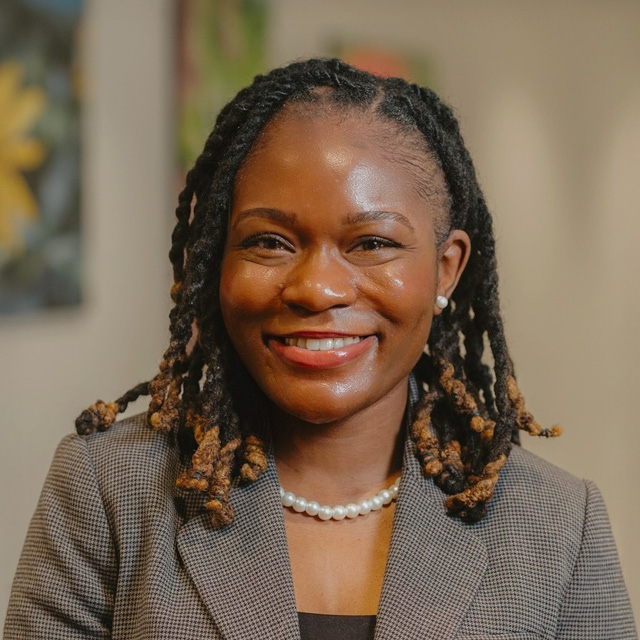
Zhané Waye ’23
Master of Public Policy (MPP) student at Duke University
Durham, NC
WFU Class of 2023
Major: Music
Minors: Neuroscience and Education
Career
Tell us about your journey from graduation to where you are today:
I started playing the violin in 5th grade, which really began my overall career trajectory. I’m really interested in the intersection of learning and cognitive neuroscience and the arts and how we can use the arts to enhance the learning process, especially for neurodivergent learners.
After graduating, I did Teach for America in Memphis, TN. At first, I wanted to be a music teacher. However, as I started getting matched with schools, there was a greater need for English teachers than Music teachers, so I accepted a role as an English teacher. In this position, I was able to infuse music into my teaching in a subject that was very malleable. Through that experience, I saw how engaged my students were when they actively participated in the arts. At the end of my teaching career in Memphis, I was able to help almost all of my students get to proficient reading level. I’m very interested in advocating for arts (specifically music) and the preservation of arts in public schools, especially Title I public schools.
Policy drives society. I decided to go to Public Policy grad school because policies impact so much of our everyday lives. I knew I wanted to be a part of policy so that I can advocate for the arts community. Duke is connected to the Center for Child & Family Policy, which is a think tank/research institute that focuses on the holistic development of children. That really drew me to Duke specifically. At Duke, I’m creating my own research to enhance my understanding of cognitive neuroscience and public policy.
How did you find/apply to Teach for America and then Grad School? Do you have tips for undergrads applying to post grad jobs?
The biggest advice I can give to students wanting to take a break from higher education after undergrad is to think about impact rather than career titles. This is the time to take everything we learned in the classroom and apply it in the real world. The best way to do that is to engage in something you’re really passionate about. I started teaching violin in high school, and I knew I wanted to continue teaching. Teach for America allowed me to test all of the theories I learned in school. Think about how you can make an impact at the ground level and use all the amazing knowledge and experiences you gained in school and make a difference in the world. I found that my working background benefits me in graduate school. It gives me a lot of stuff to add to discussions.
What is your favorite part about Duke?
I love basketball, so I love watching Duke basketball games. It’s a completely different experience and so exciting to be a part of. It’s also fun to be on the winning side of sports. In terms of the program I’m in, it’s a relatively small group. I love the small class sizes and connections this provides.
What and where is next for you?
I have two potential pathways. I will either continue school and get a doctoral degree in education policy or cognitive neuroscience or I would love to work at a think tank or non-profit that is researching some of the topics I’m interested in (anything arts or interdisciplinary). I’ll trust the process and go down whichever path presents itself.
Home
What is your favorite part of living and working in Durham? What is the most interesting thing going on in the art scene there at the moment, in your opinion?
One of the reasons I committed to Duke was getting to meet so many people and learn alongside peers in person. Durham is barely an hour away from Winston-Salem, but I never explored it while at Wake, so it’s been so fun to explore a new city!
Durham and Winston-Salem are kind of like sister cities. They have a lot of similarities. There has been a recent rise in neuroarts and neuro research that examines the medical impact of the arts. That is really prevalent at Duke, which is so cool to see. Certain doctors are now prescribing the arts to patients, which is fascinating to see in person.
Wake/Advice
How much did your studies and general experience at Wake inform or drive your career path?
One of the reasons I came to Wake was because I knew I could do exactly what I wanted to do, which was take an interdisciplinary approach to where I am now. I also knew I would be supported in this process. I felt so connected with every professor I met when I visited Wake.
Lab work, performance opportunities, and deepening my understanding of topics was very important to me at Wake.
What advice would you give to a student reading your profile?
Reach out to me!! Don’t be afraid to put things together that sound weird. Feel free to mesh two or three disciplines that don’t seem like they go together. If you’re interested in it and have an idea how to make it work, go for it!! It makes you very marketable in the job market.